
Highlights from the AAAC 2025 Social Justice Talk
On Wednesday, February 19, 2025, the University of Chicago Crown Family School of Social Work, Policy, and Practice, in collaboration with the African American Alumni Committee (AAAC), hosted a thought-provoking panel discussion in the lobby of Edith Abbott Hall. This timely conversation brought together scholars, healthcare leaders, and community advocates to examine the evolving landscape of racial and social justice in response to recent policy and legal shifts.
Moderated by Eugene Robinson, Jr. AM ’09, the discussion featured:
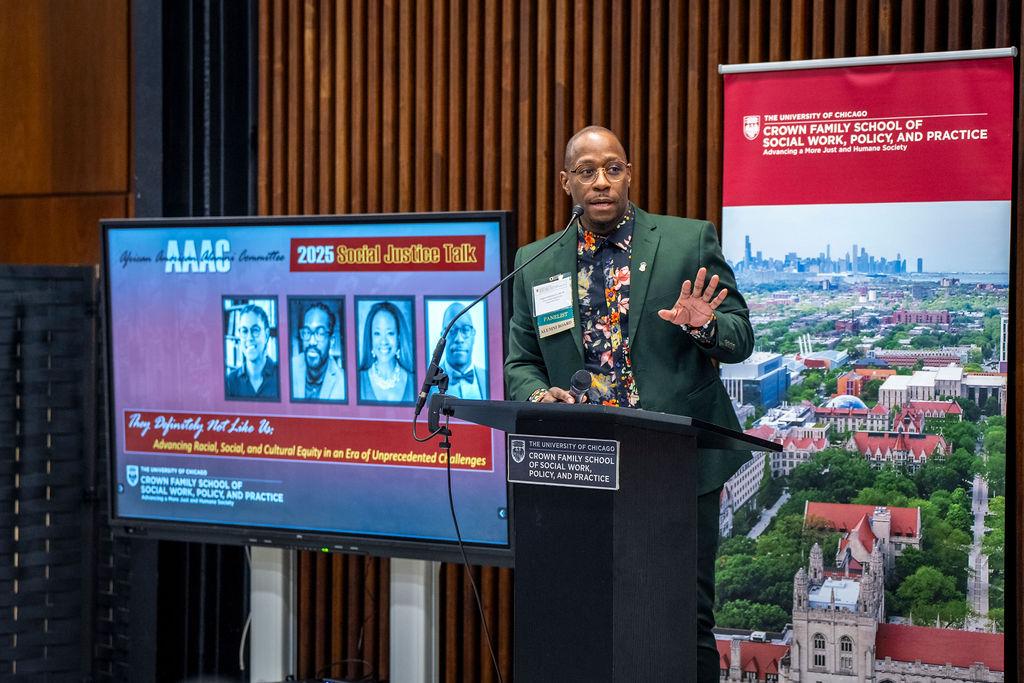
• Marshanelle Horne, APRN, FPA, FNP-BC, healthcare advocate and CEO of Thrive Life Wellness Center
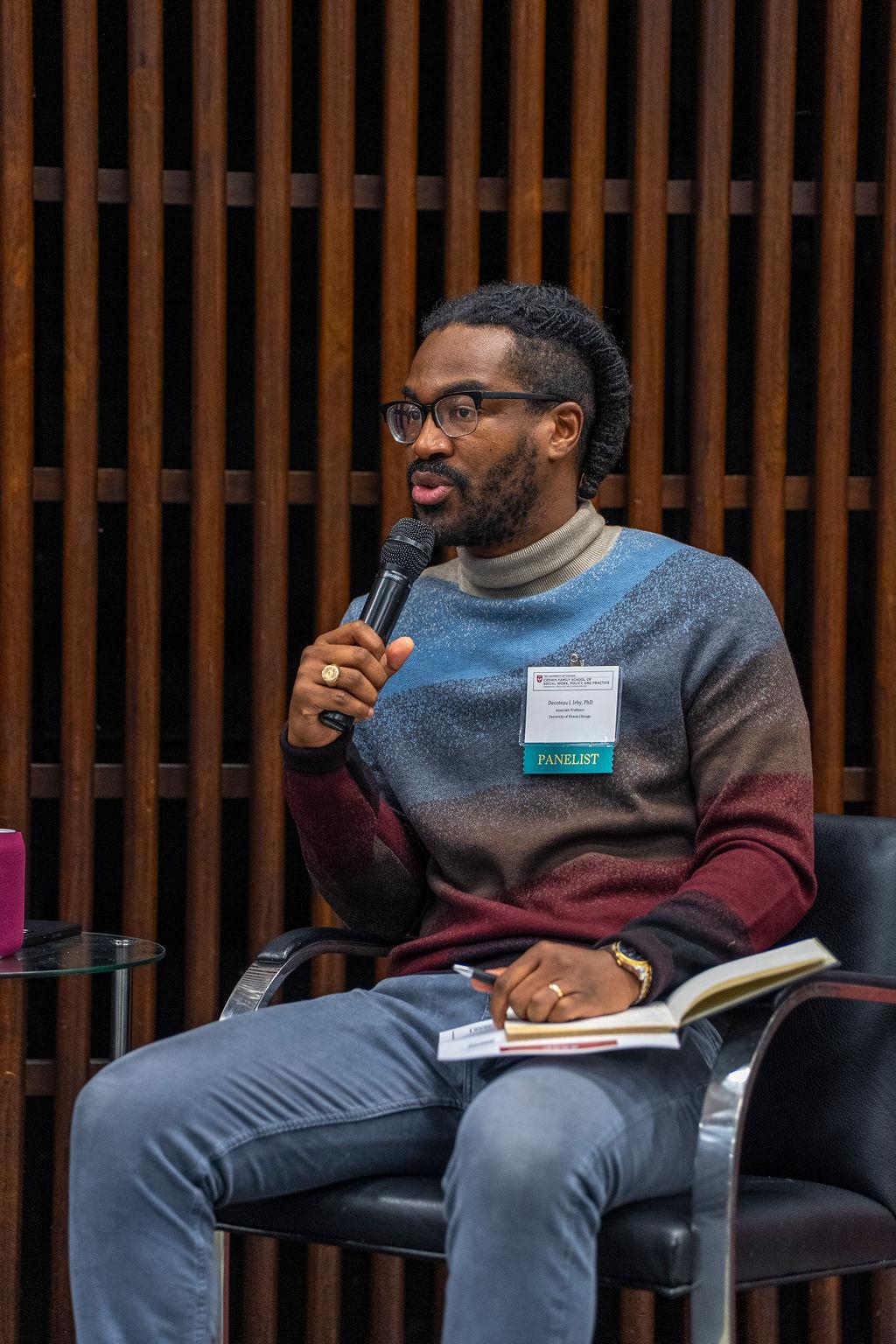
• Decoteau J. Irby, PhD, Associate Professor of Educational Policy Studies, University of Illinois Chicago
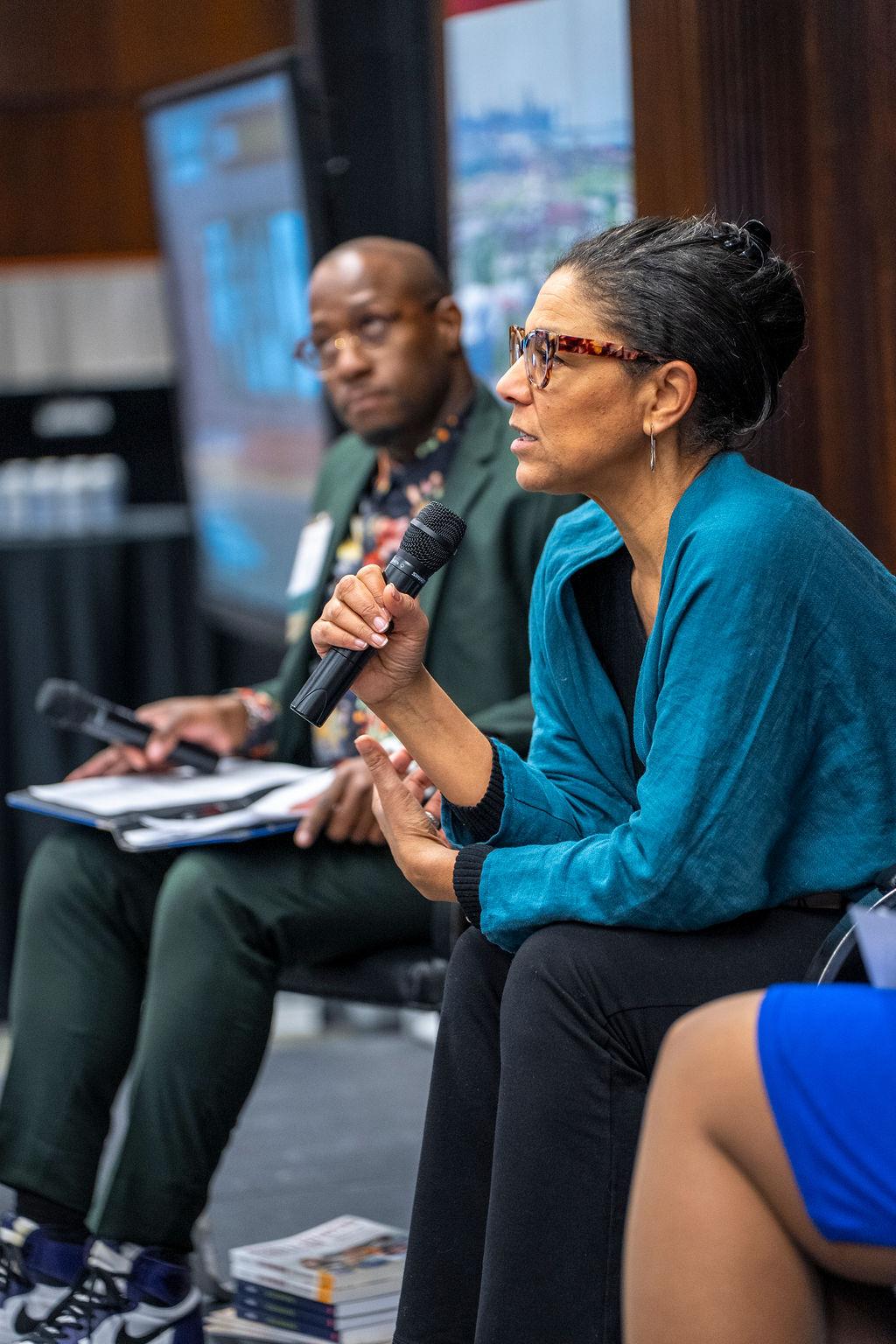
• Gina E. Miranda Samuels, PhD, Professor and Faculty Director, Center for the Study of Race, Politics, and Culture, Crown Family School
Together, they explored the impacts of Supreme Court decisions, state-level policies, and shifting narratives in public discourse, offering insights into the structural challenges facing marginalized communities and strategies for sustaining progress in the pursuit of equity.
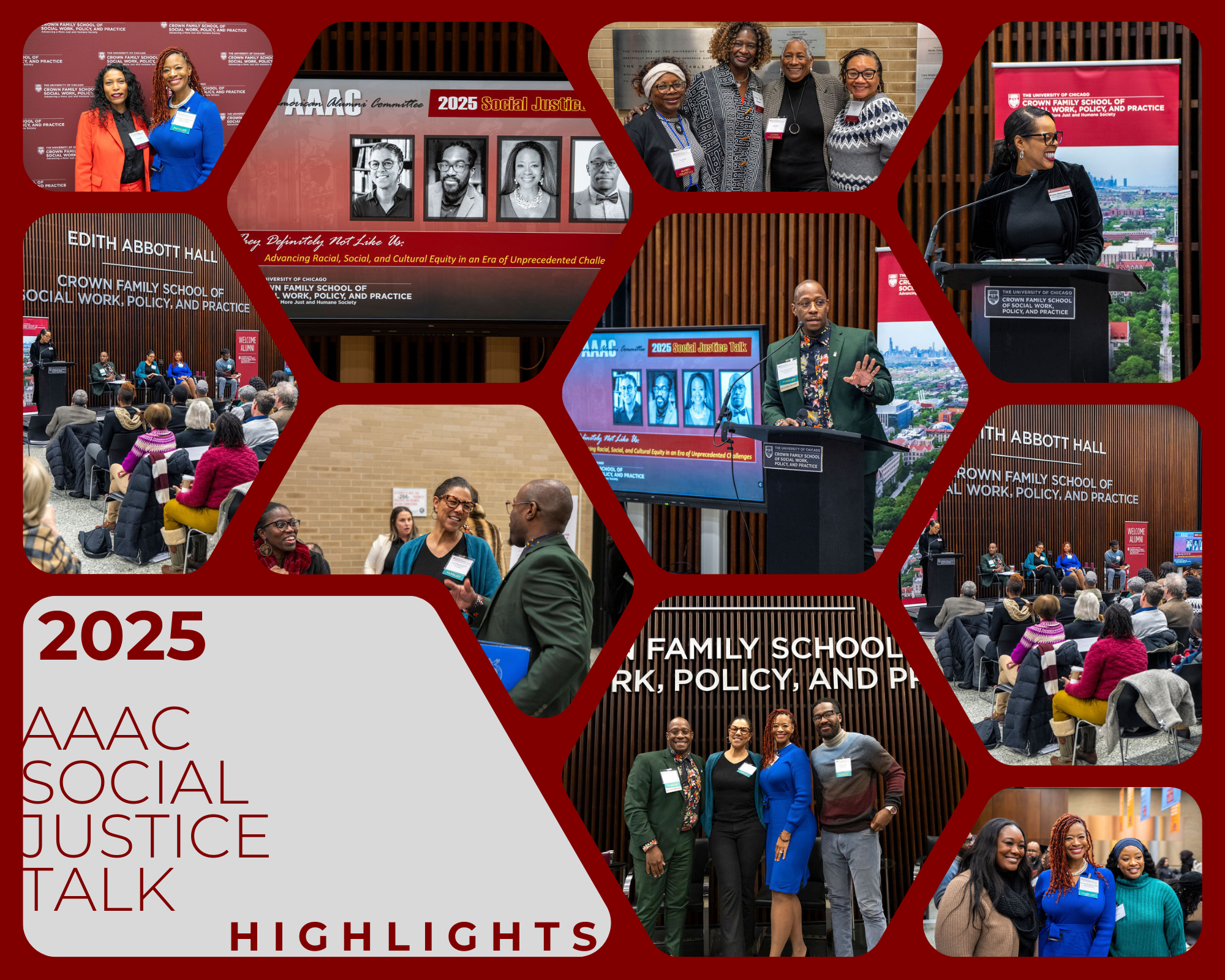
Examining the Impact of Policy Shifts
The evening began with Kristen Reid Salomon, Dean of Students for Diversity and Inclusion, who set the stage by acknowledging the growing constraints on diversity, equity, and inclusion initiatives. She emphasized that the rollback of long-standing policies presents not only legal and institutional challenges but also ethical considerations for educators, practitioners, and advocates working toward a more just society.
Panelists built on this foundation by addressing how these policy changes are affecting educational access, healthcare availability, and the narratives that shape public understanding of racial equity.

The Future of Affirmative Action and Black Mobility
Decoteau J. Irby, PhD, examined the long-term effects of the Supreme Court’s ruling on affirmative action, particularly in higher education and employment. He noted that many institutions are revising their diversity and recruitment efforts, with some scaling back race-conscious policies altogether. This shift, he explained, is likely to reduce opportunities for historically marginalized groups and narrow the pipeline for Black leadership in key sectors.
He encouraged continued engagement in efforts to promote equitable access, emphasizing that “despite legal setbacks, institutions and individuals can still champion equity through policy innovation and sustained advocacy.”
Healthcare Access in an Increasingly Restrictive Landscape
Marshanelle Horne, APRN, FPA, FNP-BC, discussed the widening disparities in healthcare access, particularly regarding reproductive and gender-affirming care. She highlighted the impact of recent state policies that have restricted access to essential medical services, leaving many individuals, particularly those in marginalized communities, with limited or no options for care.
Horne described how healthcare providers are adapting by expanding community-based models and strengthening advocacy networks to ensure that individuals can still access the care they need. “As policies shift, it is critical to support models of care that prioritize equity and uphold the right to essential healthcare services,” she stated.

Shaping Public Narratives and Challenging Disinformation
The panel also explored the role of historical narratives in shaping contemporary policies and the challenges posed by efforts to limit discussions on race and systemic inequity in public education. Gina E. Miranda Samuels, PhD, discussed how these restrictions are reshaping public understanding of racial justice issues, often distorting historical truths to justify policy changes. She emphasized the importance of ensuring that scholarship and advocacy continue to challenge misinformation and provide accurate, research-based perspectives on racial history and equity.
Samuels pointed to ongoing efforts by scholars and educators to develop accessible, historically grounded curricula that counteract disinformation and promote critical engagement with issues of race and systemic inequality. “We must remain vigilant in ensuring that history is not rewritten to serve exclusionary agendas,” she noted.
Sustaining Progress: Strategies for Collective Action
Throughout the discussion, panelists underscored the importance of mobilizing collective action to address ongoing challenges. Key strategies included:
- Advocating for Policy Reform – Supporting legislation that protects equitable access to education, employment, and healthcare.
- Strengthening Community-Based Healthcare Models – Expanding local clinics and advocacy networks to address disparities in medical care.
- Promoting Fact-Based Public Discourse – Engaging in media and education initiatives that ensure historically accurate, research-based narratives remain accessible.
- Fostering Civic Engagement – Encouraging grassroots activism, voter engagement, and coalition-building to drive long-term policy change.
As the event concluded, Eugene Robinson, Jr. asked panelists for their thoughts on sustaining this work and avoiding burnout in the face of ongoing challenges.
Samuels offered a final reflection that resonated with the room:
“Take care of yourselves. We can’t afford to burn out. Keep fighting, keep showing up, and hold onto joy. That’s part of resistance, too.”
Her words reinforced a key takeaway from the evening: the pursuit of equity is not only about policy shifts but also about resilience, strategy, and sustained collective action.


