
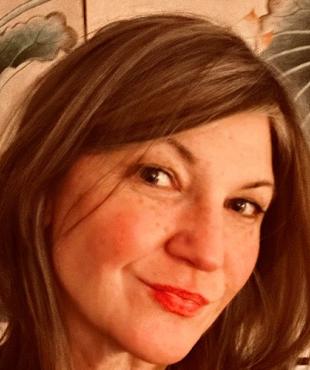
E. Summerson Carr, PhD
969 E. 60th Street
Chicago, IL 60637
Office Location: BE-5A, & Haskell Hall 120
Professor Carr's current project is a study of Canine-Assisted Therapy (CAT). It seeks to understand how an iconic therapy animal with a rich service history—the American Dog—is trained and deployed in a variety of clinical and social service settings. This project extends her ongoing inquiry into the social histories, logics and economics of therapeutic practices and institutions, as well as her broader interest in expertise. Specifically, her research investigates how and why American dogs have increasingly come to be seen as expert communicators and caregivers in human service settings. During the 26-27 academic year, she will be working on a book based on this research as a fellow at Stanford's Center for Advanced Study in the Behavioral Sciences. The manuscript is entitled: Working Like a Dog: The Hidden Life and Labor of Full-Time Facility Dogs.
In 2023, Professor Carr published Working the Difference: Science, Spirit and the Spread of Motivational Interviewing with University of Chicago Press. The book is based on her ethnographic study of a prominent behavioral intervention called motivational interviewing (MI). The book documents how helping professionals learn, train, and institutionalize MI in various practice settings, and how their ideas about the nature and meaning of their work transform accordingly.
Professor Carr’s first book, Scripting Addiction: The Politics of Therapeutic Talk and American Sobriety (Princeton, 2010), traces the cultural and clinical history of American ideas about addiction and sobriety and examines how these ideas are put into play at a drug treatment program in the Midwestern U.S., where she conducted extensive research. The book addresses the puzzling question of why mainstream American addiction treatment entails rehabilitating drug users’ relationship to language as much as reconfiguring their relationship to drugs. The book received the Society of Linguistic Anthropology’s Edward Sapir Award, and has been reviewed by American Anthropologist, Choice, Contemporary Sociology, Dicourse Studies, Ethnos, Hedgehog Review, Journal of Linguistic Anthropology, Journal of the Royal Anthropological Institute, Qualitative Social Work, Social Service Review, Social Anthropology, Society, and Somatosphere.
Professor Carr also co-edited a volume, titled Scale: Discourse and Dimensions of Social Life (University of California Press) with Michael Lempert (University of Michigan). The book explores how, why, under what circumstances, and to what ends social actors, in diverse circumstances, scale their worlds. For instance, American social work has long organized its pedagogical practices, if not its actual labor by way of the ubiquitous macro-meso-micro distinction. Rather than taking such scalar distinctions as ready-made platforms on which professional practice simply unfolds, Carr argues—in her teaching as well as her research—that we should investigate the effects of divvying up social life in this manner and explore alternatives.
This course is designed to provide an analytic framework that enables students to understand how social problems are socially constructed, how social policies are created...
MONOGRAPHS
2023 Working the Difference: Science, Spirit, and the Spread of Motivational Interviewing. Chicago: University of Chicago Press.
2011 Scripting Addiction: The Politics of Therapeutic Talk and American Sobriety. Princeton,
New Jersey: Princeton University Press.
EDITED VOLUMES
2023 Language in Culture: Lectures in the Social Semiotics of Language by Michael Silverstein. Co-edited with Susan Gal and Constantine Nakassis. Cambridge University Press.
2016 Scale: Discourse and Dimensions of Social Life. Co-edited with Michael Lempert. Berkeley, CA: University of California Press.
PEER REVIEWED ARTICLES
2026 “Therapeutic Communication.” Annual Review of Anthropology. (October)
2022 “Legitimizing Evidence: The Trans-institutional Life of Evidence-Based Practice.” Co-authored with Hannah Obertino-Norwood. Social Science & Medicine 310: 115130.
2021 “Learning How Not to Know: Pragmatism, (In)expertise, and the Training of American Helping Professionals.” American Anthropologist 123 (3): 526-538.
2019 “The Work of ‘Crisis’ in the ‘Opioid Crisis.’” Invited Commentary for the Special Issue, “Treating Addictions. On Failures, Harms, and Hopes of Success.” Journal of Extreme Anthropology 3(2): 161-166.
2015 “Occupation Bedbug (Or, The Urgency and Agency of Professional Pragmatism).” Cultural Anthropology 30(2): 257-285.
2014 “The Poetics of Therapeutic Practice: Motivational Interviewing and the Powers of Pause.” Co-authored with Yvonne Smith. Culture, Medicine, Psychiatry 37(1): 83-114.
2013 “Signs of the Times: Confession and the Semiotic Production of Inner Truth.” Journal of the Royal Anthropological Institute 19(1): 34-51.
2011 “Qualifying the Qualitative Social Interview: A Linguistic Anthropological
Approach.” Qualitative Social Work 10(1): 123-143.
2010 “Enactments of Expertise.” Annual Review of Anthropology 39: 17-32.
2009 “Anticipating and Inhabiting Institutional Identities.” American Ethnologist 36(2): 317-36.
2006 “’Secrets Keep You Sick’: Metalinguistic Labor in a Drug Treatment Program for Homeless Women.” Language in Society 35(5): 631-653.
Chapters In Edited Volumes
In press “The Might of Institution (or, the Social Work of Michael Silverstein).” Invited chapter for The Total Linguistic Fact: Linguistic Anthropology in the Wake of Michael Silverstein edited by Luke Fleming, Nicholas Harkness, and Constantine Nakassis. University of Toronto Press.
2025 “An American Canard: Carl Rogers, B.F. Skinner, and the Freedom of (Therapeutic)
Speech.” Invited chapter for Freedoms of Speech: Anthropological Perspectives on Language, Ethics and Power edited by Matei Candea, Taras Fedriko, Paolo Heywood, and Fiona Wright. University of Toronto Press, 344-359.
2023 “(In)expertise & the Paradox of Therapeutic Governance.” Invited chapter for The Oxford Handbook of Expertise & Democratic Politics, Edited by Gil Eyal and Tom Medvetz. Oxford University Press, 482-509.
2016 “Pragmatics of Scale.” Co-authored with Michael Lempert. In E.S. Carr & M. Lempert (eds.), Scale: Discourse and Dimensions of Social Life. Berkeley: University of California Press, 1-24.
2016 “Interscaling Awe; De-escalating Disaster.” Co-authored with Brooke Fisher. In E.S. Carr & M. Lempert (eds.), Scale: Discourse and Dimensions of Social Life. Berkeley: University of California Press, 133-158.
2016 “Flipping the Script: Reimagining the Social Service Encounter.” In T. A. Andreassen, J. F. Gubrium & P. K. Solvang (eds.), Reimagining the Relationship between Professionals & Service Users. New York: Columbia University Press, 79-99.
2013 “Signs of Sobriety: Rescripting American Addiction Counseling.” In E. Raikhel and W. Garriott (eds.), Addiction Trajectories. Duke University Press, 160-87.
E. Summerson Carr is the Hermon Dunlap Smith Professor. She holds a joint appointment in the Crown Family School of Social Work, Policy, and Practice and the Department of Anthropology in the Division of Social Sciences. She is a sociocultural and linguistic anthropologist who conducts ethnographic studies of social work and allied professions. She sustains broader interests in the cultural history of North American psychotherapies, the politics of communication, interspecies collaboration and communication, the ethnography of complex institutions, and the anthropology of the United States.
At Crown Family School of Social Work, Policy, and Practice, Carr teaches a research class focused on ethnographic methods, the winter term of the required policy sequence, and an advanced HBSE course called, Drugs: Culture and Context. In the doctoral program, she regularly offers the course, Professional Vision. In addition to her joint appointment, she is an Associate Faculty of Comparative Human Development and an affiliate of the Center for the Study of Gender and Sexuality.
Professor Carr received a Ph.D. in Anthropology and Social Work at the University of Michigan, where she also earned an M.S.W., an M.A. in Anthropology, and a Graduate Certificate in Women's Studies.